


Page 296 - Machine Learning for Subsurface Characterization
P. 296
258 Machine learning for subsurface characterization


            The receivers are referred using indices ranging from 0 to 27. The receivers
            located on the upper boundary adjacent to the source-bearing boundary have
            index ranging from 0 to 9. The receivers located on the lower boundary adjacent
            to the source-bearing boundary have index ranging from 18 to 27. The receivers
            located on the boundary opposite to the source-bearing boundary have index
            ranging from 9 to 18. On each of the three boundaries, the receivers are placed
            incrementally in the order of indices. The receiver with index of 0 is located at
            the top left corner, the receiver with index of 9 is located at the top right corner,
            the receiver with index of 27 is located at the bottom right corner, and the
            receiver with index of 18 is located at the bottom left corner.
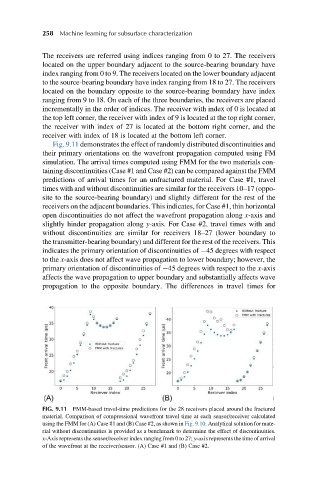
               Fig. 9.11 demonstrates the effect of randomly distributed discontinuities and
            their primary orientations on the wavefront propagation computed using FM
            simulation. The arrival times computed using FMM for the two materials con-
            taining discontinuities (Case #1 and Case #2) can be compared against the FMM
            predictions of arrival times for an unfractured material. For Case #1, travel
            times with and without discontinuities are similar for the receivers 10–17 (oppo-
            site to the source-bearing boundary) and slightly different for the rest of the
            receivers on the adjacent boundaries. This indicates, for Case #1, thin horizontal
            open discontinuities do not affect the wavefront propagation along x-axis and
            slightly hinder propagation along y-axis. For Case #2, travel times with and
            without discontinuities are similar for receivers 18–27 (lower boundary to
            the transmitter-bearing boundary) and different for the rest of the receivers. This
            indicates the primary orientation of discontinuities of  45 degrees with respect
            to the x-axis does not affect wave propagation to lower boundary; however, the
            primary orientation of discontinuities of  45 degrees with respect to the x-axis
            affects the wave propagation to upper boundary and substantially affects wave
            propagation to the opposite boundary. The differences in travel times for


            FIG. 9.11 FMM-based travel-time predictions for the 28 receivers placed around the fractured
            material. Comparison of compressional wavefront travel time at each sensor/receiver calculated
            using the FMM for (A) Case #1 and (B) Case #2, as shown in Fig. 9.10. Analytical solution for mate-
            rial without discontinuities is provided as a benchmark to determine the effect of discontinuities.
            x-Axis represents the sensor/receiver index ranging from 0 to 27; y-axis represents the time of arrival
            of the wavefront at the receiver/sensor. (A) Case #1 and (B) Case #2.

