


Page 298 - Machine Learning for Subsurface Characterization
P. 298
260 Machine learning for subsurface characterization


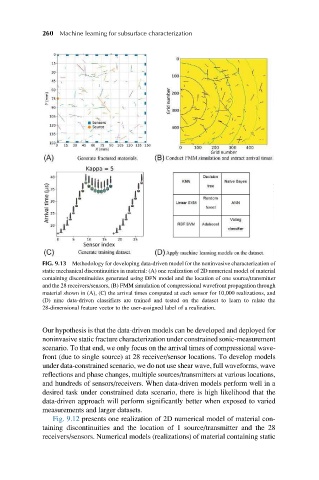
            FIG. 9.13 Methodology for developing data-driven model for the noninvasive characterization of
            static mechanical discontinuities in material: (A) one realization of 2D numerical model of material
            containing discontinuities generated using DFN model and the location of one source/transmitter
            and the 28 receivers/sensors, (B) FMM simulation of compressional wavefront propagation through
            material shown in (A), (C) the arrival times computed at each sensor for 10,000 realizations, and
            (D) nine data-driven classifiers are trained and tested on the dataset to learn to relate the
            28-dimensional feature vector to the user-assigned label of a realization.

            Our hypothesis is that the data-driven models can be developed and deployed for
            noninvasive static fracture characterization under constrained sonic-measurement
            scenario. To that end, we only focus on the arrival times of compressional wave-
            front (due to single source) at 28 receiver/sensor locations. To develop models
            under data-constrained scenario, we do not use shear wave, full waveforms, wave
            reflections and phase changes, multiple sources/transmitters at various locations,
            and hundreds of sensors/receivers. When data-driven models perform well in a
            desired task under constrained data scenario, there is high likelihood that the
            data-driven approach will perform significantly better when exposed to varied
            measurements and larger datasets.
               Fig. 9.12 presents one realization of 2D numerical model of material con-
            taining discontinuities and the location of 1 source/transmitter and the 28
            receivers/sensors. Numerical models (realizations) of material containing static

