


Page 145 - Bebop to The Boolean Boogie An Unconventional Guide to Electronics Fundamentals, Components, and Processes
P. 145
126 H Chapter Eleven

                 1  --
           -clear
                0  ---I
                       L
                 1  _--- _---_-      I
         serial-in     I             I
                0-     I  I          I  I
                 1
            clack
                0
                                                 I           I           I           I
                                     I           I           I           I           I
                                     I           I           I           I           I
             9PI                     I  I        I           I           I           I
                0                                I  I        I           I           I
                 1
             q[ll   x  XI                        I  I        I  I        I  I        I  I
                0
                 1
             qC21   x  XI                                    I  I        I  I        I  I
                0
                 1                                                       I
             qc31    XXI                                                 I
                 0                                                       I
                                                                                           -
                                                                                         Time
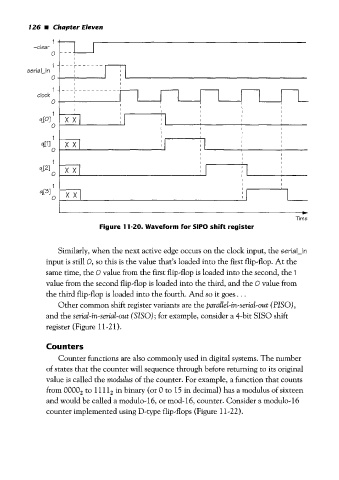
                               Figure 11-20. Waveform for SIP0 shift register


                  Similarly, when the next active edge occurs on the clock input, the 5eria I-in
                              so
               input is still 0, this is the value that’s loaded into the first flip-flop. At the
               same time, the O value from the first flip-flop is loaded into the second, the I
               value from the second flip-flop is loaded into the third, and the O value from
               the third flip-flop is loaded into the fourth. And so it goes. . .
                  Other common shift register variants are the paralEel-in-serial-out (PISO) ,

               and the serial-in-serial-out (SISO); for example, consider a 4-bit SISO shift
               register (Figure 11-21).

               Counters

                   Counter functions are also commonly used in digital systems. The number
               of states that the counter will sequence through before returning to its original
               value is called the modulus of the counter. For example, a function that counts
               from 0000,  to 11 1 1,  in binary (or 0 to 15 in decimal) has a modulus of sixteen
               and would be called a modulo-16, or mod-16, counter. Consider a modulo-16
               counter implemented using D-type flip-flops (Figure 11-22).

