


Page 577 - Dynamics of Mechanical Systems
P. 577
0593_C16_fm  Page 558  Tuesday, May 7, 2002  7:06 AM


                       558                                                 Dynamics of Mechanical Systems


                       Follower                                    Follower
                        Rise                                        Rise

                                                                           Smoothed     Smoothed Corner
                                                                             Corner


                                  θ         θ   Cam Rotation                 θ         θ   Cam Rotation
                                   1         2                                1         2
                                                  Angle                                      Angle
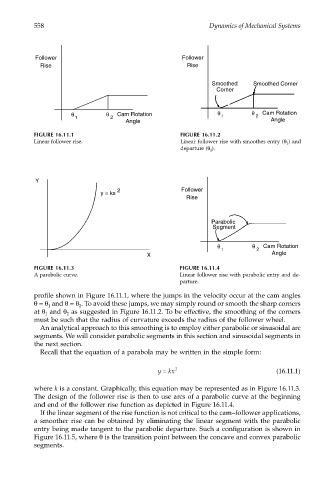
                       FIGURE 16.11.1                             FIGURE 16.11.2
                       Linear follower rise.                      Linear follower rise with smoothes entry (θ 1 ) and
                                                                  departure (θ 2 ).


                       Y
                                               2                  Follower
                                          y = kx
                                                                    Rise


                                                                           Parabolic
                                                                            Segment

                                                                             θ         θ   Cam Rotation
                                                                              1          2
                                                        X                                    Angle
                       FIGURE 16.11.3                             FIGURE 16.11.4
                       A parabolic curve.                         Linear follower rise with parabolic entry and de-
                                                                  parture.
                       profile shown in Figure 16.11.1, where the jumps in the velocity occur at the cam angles
                       θ = θ  and θ = θ . To avoid these jumps, we may simply round or smooth the sharp corners
                           1
                                    2
                       at θ  and θ  as suggested in Figure 16.11.2. To be effective, the smoothing of the corners
                          1
                                2
                       must be such that the radius of curvature exceeds the radius of the follower wheel.
                        An analytical approach to this smoothing is to employ either parabolic or sinusoidal arc
                       segments. We will consider parabolic segments in this section and sinusoidal segments in
                       the next section.
                        Recall that the equation of a parabola may be written in the simple form:
                                                           y =  kx 2                           (16.11.1)

                       where k is a constant. Graphically, this equation may be represented as in Figure 16.11.3.
                       The design of the follower rise is then to use arcs of a parabolic curve at the beginning
                       and end of the follower rise function as depicted in Figure 16.11.4.
                        If the linear segment of the rise function is not critical to the cam–follower applications,
                       a smoother rise can be obtained by eliminating the linear segment with the parabolic
                       entry being made tangent to the parabolic departure. Such a configuration is shown in
                       Figure 16.11.5, where θ is the transition point between the concave and convex parabolic
                       segments.

