


Page 169 - Volcanic Textures A Guide To The Interpretation of Textures In Volcanic Rocks
P. 169
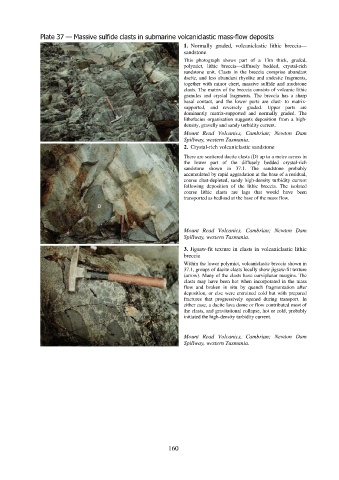
Plate 37 — Massive sulfide clasts in submarine volcaniclastic mass-flow deposits
                                                                  1.  Normally graded,  volcaniclastic lithic breccia—
                                                                  sandstone
                                                                  This photograph shows part  of a 13m thick, graded,
                                                                  polymict, lithic breccia—diffusely bedded, crystal-rich
                                                                  sandstone unit.  Clasts in the breccia comprise  abundant
                                                                  dacite, and less abundant rhyolite and andesite fragments,
                                                                  together with minor chert, massive sulfide and  mudstone
                                                                  clasts. The matrix of the breccia consists of volcanic lithic
                                                                  granules and  crystal fragments. The breccia has a sharp
                                                                  basal  contact, and the  lower parts are clast-  to matrix-
                                                                  supported,  and reversely graded. Upper  parts are
                                                                  dominantly matrix-supported and normally graded. The
                                                                  lithofacies organisation suggests deposition from a high-
                                                                  density, gravelly and sandy turbidity current.
                                                                  Mount Read  Volcanics, Cambrian; Newton Dam
                                                                  Spillway, western Tasmania.
                                                                  2.  Crystal-rich volcaniclastic sandstone
                                                                  There are scattered dacite clasts (D) up to a metre across in
                                                                  the lower part of the diffusely bedded crystal-rich
                                                                  sandstone shown in 37.1.  The sandstone probably
                                                                  accumulated by rapid aggradation at the base of a residual,
                                                                  coarse clast-depleted, sandy high-density turbidity current
                                                                  following deposition of the lithic breccia. The isolated
                                                                  coarse lithic clasts are lags that would have been
                                                                  transported as bedload at the base of the mass flow.


                                                                  Mount Read  Volcanics, Cambrian; Newton Dam
                                                                  Spillway, western Tasmania.

                                                                  3. Jigsaw-fit texture in clasts in volcaniclastic lithic
                                                                  breccia
                                                                  Within the lower polymict, volcaniclastic breccia shown in
                                                                  37.1, groups of dacite clasts locally show jigsaw-fit texture
                                                                  (arrow). Many of the clasts have curviplanar margins. The
                                                                  clasts may have been hot when incorporated in the mass
                                                                  flow and broken in situ by quench fragmentation  after
                                                                  deposition, or else were entrained cold but with prepared
                                                                  fractures that progressively opened during transport. In
                                                                  either case, a dacite lava dome or flow contributed most of
                                                                  the clasts, and gravitational collapse, hot or cold, probably
                                                                  initiated the high-density turbidity current.


                                                                  Mount Read  Volcanics, Cambrian; Newton Dam
                                                                   Spillway, western Tasmania.


                                                            160

